Last Updated:
March 23, 2026
Many homeowners ask the same question each year as the growing season approaches: “Can I fertilize my own lawn, or should I hire a professional?” While fertilizing your own lawn is certainly possible, it comes with more risks and challenges than most people realize. Lawn fertilization requires proper timing, correct application rates, soil awareness, and an understanding of how grass responds throughout the year.
Although DIY fertilization may seem like a cost-saving option, professional lawn fertilization is often the safer, more effective choice for achieving long-term lawn health without risking damage.
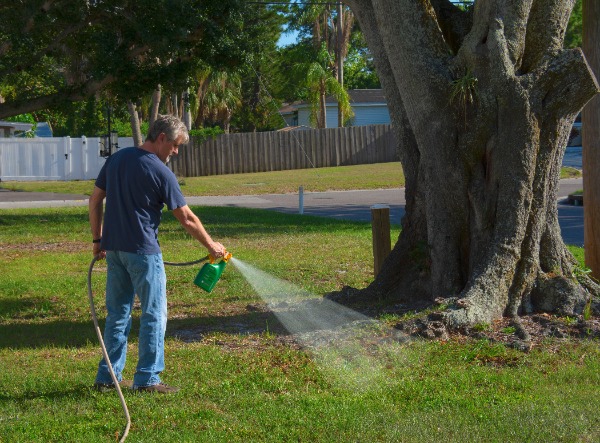
Yes, homeowners can fertilize their own lawns, but doing it correctly is more complicated than simply buying a bag of fertilizer and spreading it across the yard. Fertilizer products vary widely in nutrient ratios, release rates, and seasonal purpose. Applying the wrong product or using it incorrectly can cause uneven growth, nutrient deficiencies, or even severe lawn damage.
DIY fertilization also requires careful calibration of spreaders, awareness of weather conditions, and an understanding of how different grass types respond to nutrients. Without this knowledge, even well-intentioned applications can create more problems than benefits.
DIY lawn fertilization often involves:
One of the biggest concerns with DIY fertilization is the potential for mistakes that can permanently damage your lawn. Fertilizer burn, nutrient imbalance, and excessive top growth are common results of improper application.
Even small errors, such as overlapping passes with a spreader or applying fertilizer before heavy rainfall, can lead to visible damage or wasted product. In some cases, lawns may take an entire season or longer to recover. These risks are why professional fertilization programs focus on precision and timing rather than one-size-fits-all applications.
Common risks of DIY lawn fertilization include:
Professional lawn fertilization services are designed to minimize risk while maximizing results. Trained technicians understand how to apply nutrients safely, evenly, and at the correct times throughout the growing season. They also use commercial-grade products and calibrated equipment that provide consistent coverage.
Professionals don’t guess when it comes to fertilization. They follow science-based programs tailored to grass type, climate, and seasonal needs. This reduces the likelihood of overfeeding, runoff, or long-term soil issues.
Professional lawn fertilization offers key safety advantages such as:
Timing plays a critical role in successful lawn fertilization. Applying fertilizer too early, too late, or during extreme weather can prevent grass from absorbing nutrients properly. In some cases, it can even weaken turf during periods of stress.
Professional services apply fertilizer according to growth cycles rather than calendar dates. This ensures grass receives nutrients when it can actually use them, resulting in stronger roots, better color, and more consistent growth. Without this timing expertise, DIY fertilization often becomes trial-and-error.
Professional fertilization programs account for:
While DIY fertilization offers control and flexibility, it places all responsibility on the homeowner. Professional fertilization shifts that responsibility to trained experts who understand how to feed lawns safely and effectively. For homeowners who want reliable results without risking lawn damage, professional fertilization is often the smarter investment.
DIY fertilization typically involves:
Professional lawn fertilization typically includes:
Q: Can fertilizing my lawn myself damage it?
A: Yes. Improper application, over-fertilization, or poor timing can cause fertilizer burn, uneven growth, or long-term stress.
Q: Is professional lawn fertilization really safer?
A: Professional services reduce risk by using precise application rates, proper timing, and trained technicians who understand grass and soil needs.
Q: How often should a lawn be fertilized?
A: Most lawns benefit from multiple applications per year, spaced according to grass type and seasonal growth patterns.
Q: What is fertilizer burn, and how does it happen?
A: Fertilizer burn occurs when grass absorbs too much nitrogen, causing dehydration and browning. It is a common DIY mistake.
Q: Does professional fertilization help with weeds?
A: Yes. A properly fertilized lawn grows thicker and healthier, which naturally suppresses weed growth.
Q: Is professional lawn fertilization worth the cost?
A: For many homeowners, the reduced risk, improved results, and long-term lawn health make professional fertilization a cost-effective option.


Omaha's highest-rated lawn care company. Serving the Omaha, NE area for over 10 years.
Your Lawn. Made Easy.