Last Updated:
July 4, 2026
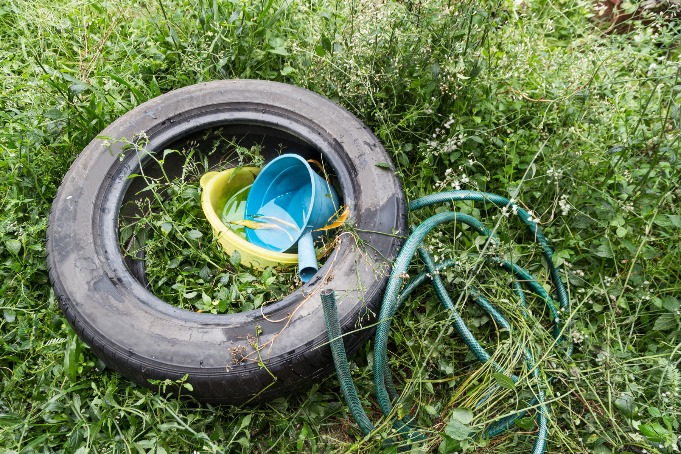
If mosquitoes seem to take over your yard every year, the source is often much closer than you think. Many people assume mosquitoes travel long distances, but most species remain fairly close to where they hatch. That means even a small amount of standing water somewhere on your property can produce hundreds of new mosquitoes in a matter of days.
Learning where mosquitoes commonly breed is the first step toward reducing their population. Below are several of the most overlooked places where mosquitoes reproduce and what you can do to keep these areas from becoming a problem.
Any container that holds water for several days can become a mosquito nursery. Bird baths, pet water dishes, fountains that aren't circulating properly, and ornamental ponds all provide ideal conditions for mosquito larvae.
Mosquitoes don't need large bodies of water to reproduce. In fact, many species prefer small, calm pools where predators are absent. Refreshing water frequently and keeping decorative features moving can significantly reduce breeding activity.
Help Reduce Mosquitoes By:
Leaves, pine needles, and other debris often trap rainwater inside gutters. Because these areas are elevated and rarely disturbed, they can quietly support mosquito development throughout much of the season.
Overflowing gutters may also create damp areas below where water collects near your home's foundation, increasing the number of potential breeding locations.
Why This Area Gets Missed: Gutters are out of sight for most homeowners, allowing stagnant water to remain unnoticed after every rainfall.
Not every mosquito breeding site looks like a puddle. Depressions in the lawn, compacted soil, poor drainage areas, and ruts left by equipment can hold water just long enough for mosquito larvae to develop.
If portions of your yard remain soggy several days after a storm while surrounding areas have dried, drainage issues may be contributing to your mosquito problem.
Common Drainage Trouble Areas Include:
Many mosquito breeding sites are completely accidental. Empty flower pots, children's toys, wheelbarrows, tarps, watering cans, and unused buckets often collect rainwater without anyone realizing it.
Even a small amount of water trapped beneath a flower pot saucer can support mosquito larvae. Regularly checking outdoor storage areas helps eliminate many of these hidden breeding locations before mosquitoes have a chance to emerge.
Although mosquitoes need standing water to reproduce, they spend much of their adult lives resting in cool, humid vegetation. Thick shrubs, tall grass, unmanaged brush, and heavily shaded planting beds provide excellent shelter during the hottest parts of the day.
When breeding sites are located nearby, these protected areas become staging grounds where mosquitoes wait until evening to begin feeding.
Landscape Improvements That Help:
Drainage pipes, catch basins, French drains, and flexible corrugated tubing sometimes retain pockets of water long after rain has ended. Because these areas remain dark and protected, they can become recurring mosquito breeding locations that are difficult to identify without careful inspection.
Routine maintenance helps ensure drainage systems continue moving water instead of allowing it to stagnate.
Sometimes your own yard isn't the primary source of mosquitoes. Nearby retention ponds, neglected swimming pools, abandoned containers, wooded areas, and neighboring properties with standing water can all contribute to mosquito activity around your home.
Although you can't eliminate every breeding site in the surrounding area, reducing mosquito habitat on your own property can still make your outdoor spaces much more comfortable.
Q: How much water do mosquitoes need to breed?
A: Surprisingly little. Many mosquito species can complete their life cycle in less than an inch of standing water.
Q: How quickly can mosquitoes hatch?
A: Under warm conditions, mosquito eggs can develop into biting adults in as little as seven to ten days.
Q: Does moving water prevent mosquito breeding?
A: Constantly moving water is much less attractive to mosquitoes than stagnant water, which is why properly circulating fountains and pumps are helpful.
Q: Can mosquitoes breed in my gutters?
A: Yes. Gutters clogged with leaves and debris frequently hold enough water to support mosquito larvae.
Q: Why do I still have mosquitoes after removing standing water?
A: Adult mosquitoes may be resting in nearby vegetation or flying in from neighboring properties, making professional mosquito treatments beneficial in addition to habitat reduction.
Q: Is removing breeding sites enough to eliminate mosquitoes completely?
A: Eliminating standing water greatly reduces mosquito populations, but combining habitat management with routine professional mosquito control typically provides the most effective long-term results.


Omaha's highest-rated lawn care company. Serving the Omaha, NE area for over 10 years.
Your Lawn. Made Easy.