Last Updated:
March 23, 2026
Aeration is meant to loosen compacted soil so air, water, and nutrients can move down to the roots. But if a dense layer of thatch sits between the grass and the soil, aeration may not reach the areas where it’s actually needed. In those situations, removing excess thatch first often helps aeration do its job more effectively and leads to better results afterward.
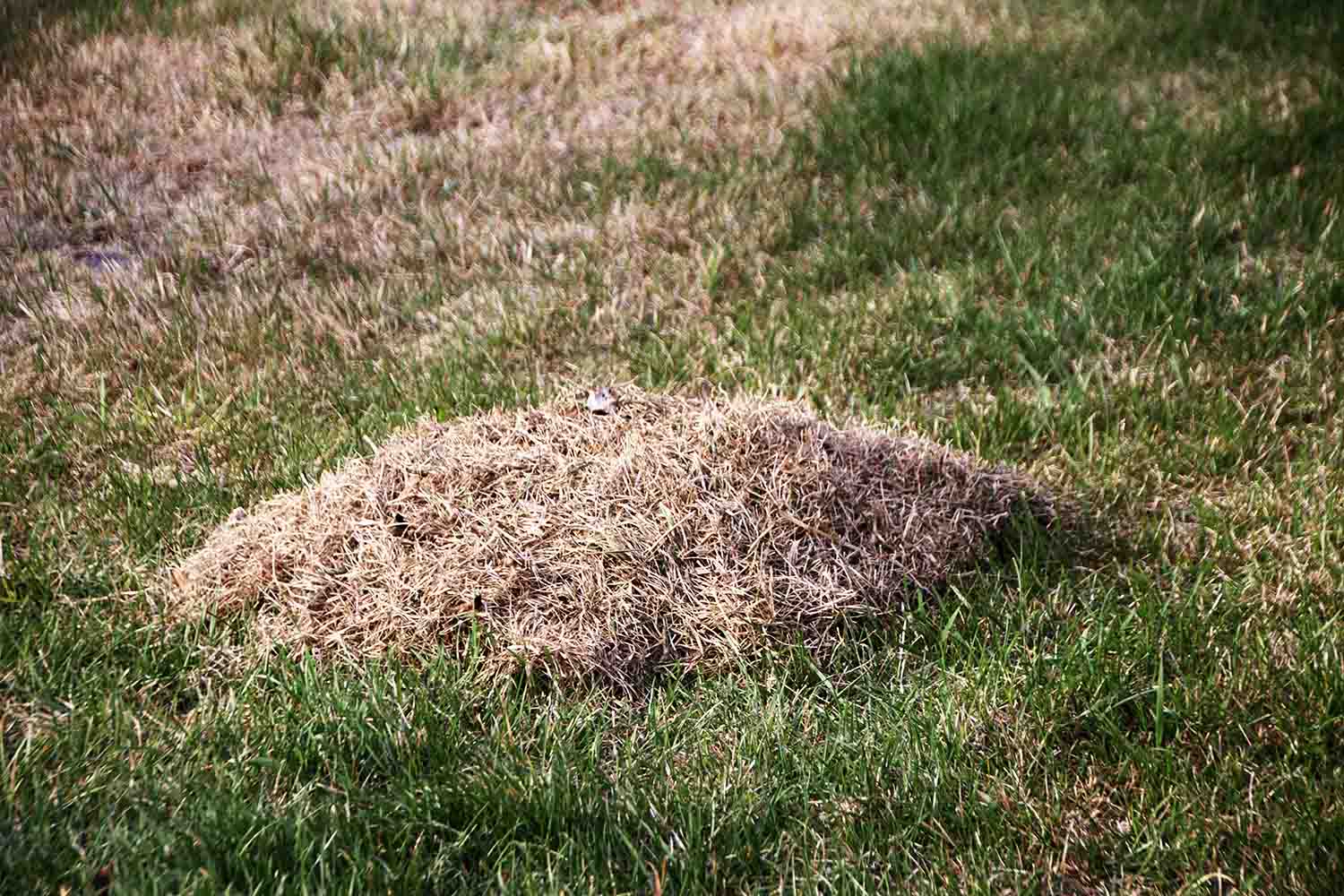
A lot of people assume thatch is just a buildup of grass clippings left behind after mowing. In reality, clippings usually break down pretty quickly and rarely cause thatch problems on their own.
True thatch is made up of a mix of plant material that doesn’t decompose as quickly. It includes things like roots, stems, runners, and crowns from the grass plant itself. Over time, these pieces weave together into a layer that sits between the soil and the green blades of grass above it.
A small amount of this material can actually help the lawn. It provides a bit of insulation for the soil, helps hold moisture, and adds some cushioning when people walk across the yard. Trouble starts when the layer becomes thick enough that water, nutrients, and air struggle to move through it.
Not every lawn with thatch needs attention. What really matters is how thick the layer has become. When thatch stays under about half an inch, it usually doesn’t cause noticeable problems. Once it grows beyond that point, it can begin to interfere with how the lawn functions. Excessive thatch can lead to issues such as:
Lawn aeration is performed to relieve soil compaction. During the process, specialized equipment removes small plugs of soil from the ground. These openings give air, water, and nutrients a path to move deeper into the soil.
As the soil loosens, grass roots have room to grow downward instead of staying near the surface. Over time, this helps produce thicker turf, stronger root systems, and better drought tolerance.
For aeration to work well, the equipment needs to reach the soil directly. When the lawn is covered by a dense thatch layer, that connection between the grass and the soil can be partially blocked.
Both dethatching and aeration can be a bit stressful for a lawn, so timing matters. The best time to perform either service is during periods when the grass is actively growing and able to recover quickly.
When these treatments are done during active growth, the lawn usually fills back in without much trouble. Doing them during slow growth or extreme weather can make recovery take longer and may leave the lawn open to weeds or disease.
If a lawn has a heavy buildup of thatch, giving it a short recovery window after dethatching can help reduce stress before aeration takes place, especially if the turf is already thin or struggling.
When thatch becomes thick and dense, aeration equipment doesn’t always reach the soil the way it should. Instead of pulling out clean plugs of soil, the machine may get tangled in the organic layer or fail to penetrate deeply enough. When that happens, the process doesn’t provide the same benefits. Heavy thatch can:
There are certain signs that dethatching should come before aeration. Lawns that feel soft or spongy underfoot often have a thick layer of thatch. Poor drainage, weak fertilizer response, or uneven watering results can also point to the same issue.
In those cases, removing the extra thatch helps expose the soil surface again. Once the barrier is gone, aeration equipment can reach the compacted soil more easily, making the process much more effective. This approach tackles two problems at once: clearing the buildup above the soil and loosening the soil below it.
Not every lawn needs dethatching before aeration. Many yards have only a thin layer of thatch and respond very well to aeration by itself.
When mowing, watering, and fertilization are handled properly, aeration alone can help maintain healthy soil conditions. It can also slow future thatch buildup by encouraging microbial activity in the soil, which helps organic material break down naturally. The key is understanding the condition of the lawn before deciding which service is needed.
Q: Can a thick thatch layer cause dry spots in my lawn?
A: Yes. When thatch becomes too dense, water may struggle to reach the soil evenly. This can lead to patches of grass drying out even when the lawn is watered regularly.
Q: Will overseeding work if I don’t remove heavy thatch first?
A: Usually not very well. Grass seed needs direct contact with soil to germinate, and a thick thatch layer can prevent that contact.
Q: Can soil compaction make thatch problems worse?
A: It can. Compacted soil slows the activity of microorganisms that normally break down organic material, which allows thatch to build up more quickly.
Q: Is power raking the same as dethatching?
A: Power raking is one method used to remove thatch. It’s more aggressive than manual raking and is typically used when the buildup is fairly heavy.
Q: Should you fertilize after dethatching?
A: In many cases, light fertilization after dethatching helps the lawn recover faster, as long as it’s done during the proper growing season.
Q: Can over-fertilizing increase thatch buildup?
A: Yes. Too much nitrogen can cause rapid growth, which creates more organic material than the soil can break down efficiently.

Omaha's highest-rated lawn care company. Serving the Omaha, NE area for over 10 years.
Your Lawn. Made Easy.