Last Updated:
April 11, 2026
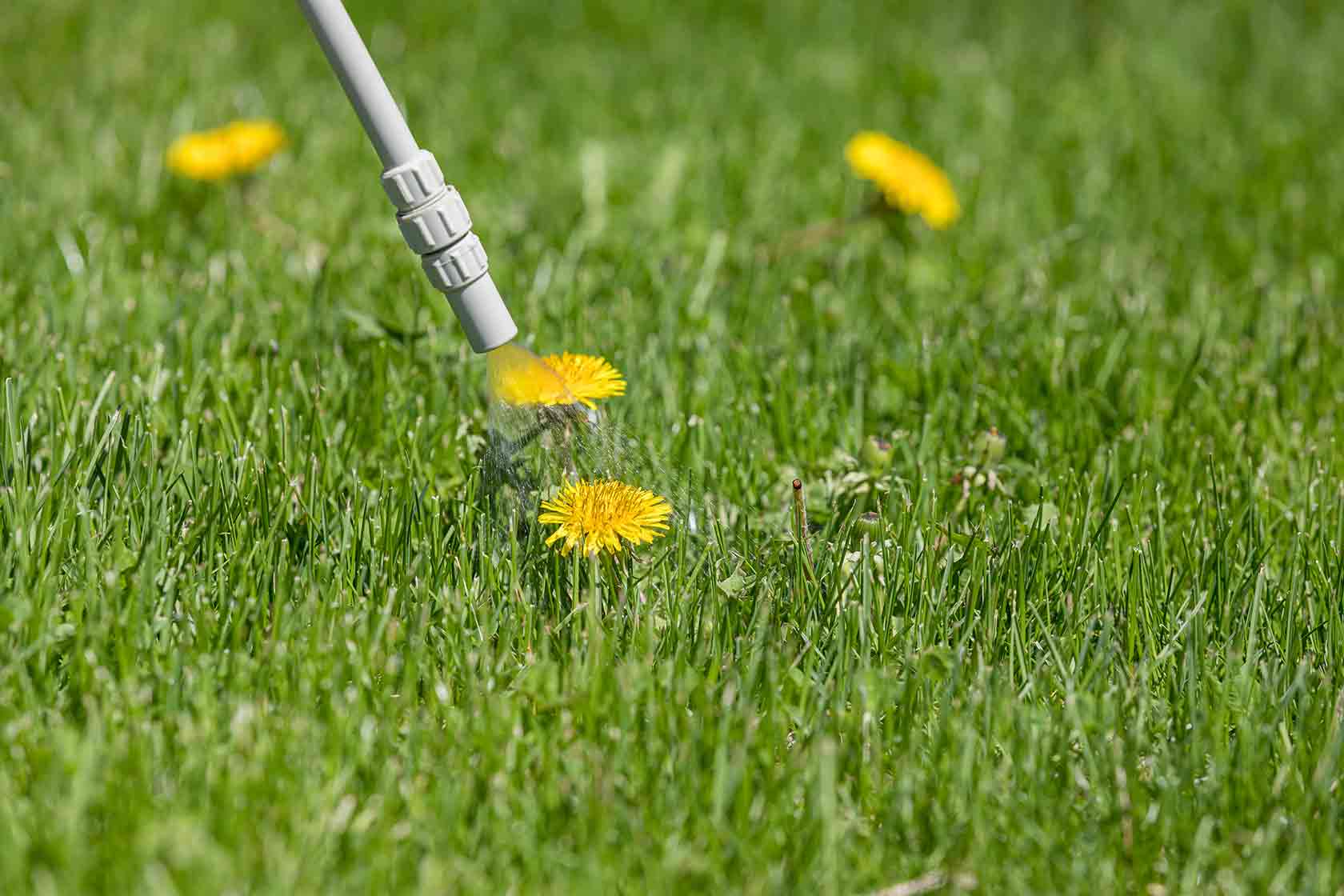
Weeds show up in just about every lawn sooner or later. Pulling a few by hand can work in small areas, but professional weed control programs are designed to target a much wider range of invasive plants that compete directly with turfgrass.
Not every weed responds to the same treatment, which is why lawn care professionals choose specific products and application timings based on the types of weeds that typically invade lawns. Keep reading to take a closer look at the kinds of weeds lawn care programs are built to control and why certain species are the primary focus.
Professional weed control programs are built around the weeds that most commonly invade lawns and compete aggressively with turfgrass. These plants are targeted because they spread quickly, steal nutrients and water from desirable grass, and can rapidly take over weak areas of a yard.
Many of these weeds fall into two main groups: broadleaf weeds and grassy weeds. Broadleaf weeds are typically easier to spot because they have wide leaves that stand out against the thin blades of turfgrass. Grassy weeds, on the other hand, blend in more easily with lawns but grow differently than desirable turf.
Professionals focus on weeds that:
While many weeds respond well to professional treatments, others are more stubborn. Certain species have deep root systems or underground runners that allow them to spread beneath the soil surface.
These weeds often survive simple removal methods and may even grow back from small pieces left behind in the soil. For this reason, professional weed control programs rely on specialized herbicides designed to target the plant without harming the surrounding turf.
Some of the weeds that can be more persistent include:
Before applying any treatment, lawn care professionals typically identify which weeds are present in the lawn. This step is important because different weeds respond to different control strategies.
Broadleaf weeds, grassy weeds, and sedges all require slightly different herbicide formulations. Professionals look at several characteristics to determine what they’re dealing with, including leaf shape, growth pattern, and how the plant spreads.
Some of the clues used to identify problem weeds include:
Most professional lawn care programs focus on a set of common weeds that frequently invade residential lawns. These plants are widespread, aggressive, and known to compete strongly with turfgrass.
Below are some of the weeds that professional weed control treatments commonly target.
Dandelions are one of the most recognizable lawn weeds. Their bright yellow flowers eventually turn into white seed heads that scatter easily in the wind. Each plant grows from a deep taproot that allows it to return even after mowing.
Because of this root system, simple pulling often leaves part of the root behind, allowing the plant to grow back. Professional treatments target the root system to eliminate the weed more effectively.
Clover often appears as clusters of small round leaves scattered throughout a lawn. While some homeowners tolerate it, clover competes with grass for space and can spread quickly in nutrient-poor soil.
Selective weed control products are commonly used to remove clover while leaving surrounding grass unharmed.
Plantain weeds grow in flat rosettes with broad leaves that hug the ground. Their thick stems produce tall seed spikes that can release thousands of seeds. Because plantain thrives in compacted soil, it often appears in high-traffic areas of lawns. Professional weed control treatments help remove the plant while improving turf density so it doesn’t return.
Crabgrass is one of the most common grassy weeds found in lawns. It grows low to the ground and spreads outward in clumps, especially in thin or stressed areas of turf. Unlike many broadleaf weeds, crabgrass requires specific pre-emergent and post-emergent treatments to control it effectively.
Chickweed is a cool-season annual that forms dense mats across lawns and garden beds. It grows quickly in early spring and fall, producing small white flowers and spreading rapidly through seeds. Professional weed control programs target chickweed before it has time to spread widely.
Nutsedge looks similar to grass but grows faster and often stands taller than the surrounding lawn. It has triangular stems and spreads through underground tubers, which makes it difficult to control with basic weed treatments. Specialized herbicides are usually required to eliminate nutsedge effectively.
Spurge is a low-growing weed that forms dense mats across warm soil. When its stems are broken, they release a milky sap. This weed thrives in sunny areas and can quickly spread through seed production. Professional treatments target spurge early in its growth cycle to prevent large infestations.
Ground ivy is a creeping perennial weed that spreads through above-ground runners. It forms thick mats of foliage and can quickly take over shady areas of lawns. Because it spreads aggressively, targeted herbicide treatments are often needed to keep it under control.
Professional weed control works best when it’s part of a consistent lawn care program rather than a one-time treatment. Many weeds germinate at different times of the year, which means controlling them often requires multiple applications throughout the growing season.
Lawn care professionals also combine weed treatments with other services that strengthen the turf itself.
Key practices that improve weed control results include:
Even professional treatments can struggle under certain conditions. Environmental factors and lawn health both influence how well weed control works.
Treatments may be less effective when:
Professional weed control focuses on eliminating the weeds that cause the most trouble for homeowners. When weeds are controlled consistently, the grass can grow thicker and stronger. Over time, a dense lawn becomes one of the best natural defenses against future weed problems, creating a yard that looks cleaner, healthier, and easier to maintain.
Q: Does professional weed control kill every type of weed?
A: Most treatments target the common lawn weeds that invade turf. Some stubborn species may require specialized products or multiple applications.
Q: How long does it take to see weeds die after treatment?
A: Many weeds start showing damage within a few days, but complete control can take one to two weeks depending on the weed type.
Q: Will weed control harm my grass?
A: Professional treatments are selective and designed to target weeds without damaging healthy turf when applied correctly.
Q: Why do weeds sometimes come back after treatment?
A: New weeds often grow from seeds already in the soil or blown in from nearby areas, which is why multiple treatments are usually needed.
Q: Do different seasons affect which weeds are treated?
A: Yes. Different weeds grow at different times of year, so treatments are adjusted seasonally to target active weeds.
Q: Can a healthy lawn reduce future weed problems?
A: Yes. Thick, healthy grass crowds out weeds and makes it harder for them to establish.


Omaha's highest-rated lawn care company. Serving the Omaha, NE area for over 10 years.
Your Lawn. Made Easy.