Last Updated:
August 22, 2026
Fertilizing your lawn at the right time is just as important as choosing the right fertilizer. In Nebraska, changing temperatures, seasonal rainfall, and different types of turfgrass all affect how well your lawn can use the nutrients you apply.
Applying fertilizer too early can encourage growth before the grass is ready, while fertilizing during extreme summer heat can put unnecessary stress on the turf. This blog post explains when to fertilize a Nebraska lawn, how seasonal conditions affect fertilizer applications, and what your grass needs throughout the year.
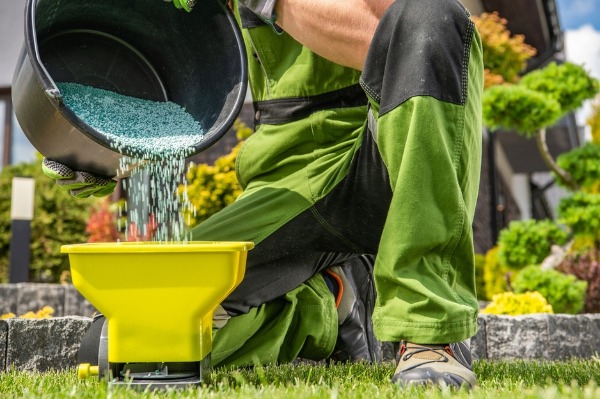
Fertilizer provides essential nutrients that grass needs to produce healthy leaves, develop strong roots, and maintain good turf density. However, grass can only make effective use of those nutrients when it is actively growing.
Applying fertilizer at the wrong time can produce disappointing results or encourage excessive top growth instead of supporting the root system. Timing fertilizer applications properly can help:
As temperatures begin rising, Nebraska lawns gradually come out of winter dormancy. This can make early spring seem like an obvious time to fertilize, but applying too much nitrogen too soon isn't always beneficial.
Cool-season grass naturally begins growing in spring, and excessive early-season fertilizer can encourage rapid leaf growth before the lawn has fully recovered from winter. If your lawn needs spring nutrition, a properly timed application can help support healthy growth. However, the specific timing should take local weather and soil conditions into account.
Late spring can be an appropriate time for another fertilizer application, particularly if the lawn needs additional nutrients after its initial spring growth. By this point, soil temperatures are rising and grass is actively growing. However, Nebraska lawns can begin experiencing warmer, drier, and increasingly unpredictable conditions as summer approaches.
A balanced fertilization program should avoid pushing excessive growth just before periods of summer heat. Proper watering and mowing become increasingly important as temperatures climb.
Summer is generally not the ideal time to heavily fertilize a Nebraska lawn. Hot temperatures can cause cool-season grasses to slow their growth and become more vulnerable to drought and heat stress. Nebraska's summer heat and occasional dry conditions can place significant stress on turf, particularly when rainfall is limited. If your lawn is brown or struggling during a particularly hot period, adding fertilizer isn't necessarily the solution.
Adding large amounts of readily available nitrogen during this period may encourage growth when the lawn is already struggling with environmental stress. Instead of focusing heavily on fertilizer, summer lawn care should emphasize:
For many Nebraska lawns, early fall is one of the most beneficial times of year for fertilization. Cooler temperatures allow cool-season grasses to resume active growth after the heat of summer. At the same time, the soil can remain warm enough to support continued root development.
Fall fertilization can help the lawn recover from summer stress while providing nutrients for both above-ground growth and developing roots. This is also an excellent period to combine fertilization with other lawn care practices such as core aeration and overseeding.
A late-fall fertilizer application can provide another important boost before winter dormancy. At this point, grass may be growing more slowly above ground, but the roots can remain active as long as soil temperatures are favorable. Providing appropriate nutrients before winter can help the turf enter dormancy in better condition.
Late-fall fertilization is often particularly valuable for cool-season lawns because it supports root health without encouraging the excessive top growth associated with some earlier applications. The exact timing should be based on weather and soil conditions rather than simply applying fertilizer on a specific calendar date.
Nebraska experiences hot summers followed by cooler autumn weather, creating an excellent recovery period for cool-season turf. The state's combination of summer heat, periods of drought, and winter temperature fluctuations makes proper seasonal lawn care especially important.
After dealing with summer heat, drought conditions, mowing stress, and increased pest or disease pressure, grass can use the fall growing season to rebuild. A well-timed fall fertilizer application can work especially well when combined with:
Not every lawn in Nebraska grows in exactly the same way. The dominant grass species can influence when fertilizer should be applied and how much nutrition the turf requires.
Kentucky bluegrass is common throughout Nebraska and typically benefits from a strong fall fertilization program. It can recover well during cooler weather and develop an extensive root system when conditions are favorable.
Fescues generally perform well during the cooler portions of the growing season. Fall applications can help maintain healthy color and density while supporting root development.
Perennial ryegrass establishes and grows quickly, making proper nutrient management important. Fertilization should encourage healthy turf without unnecessarily promoting excessive growth. Regardless of grass type, fertilizer applications should be based on the lawn's actual needs rather than following a one-size-fits-all schedule.
Your lawn can provide several clues that its nutrient supply may be inadequate. While these symptoms can have other causes, they may indicate that it's time to evaluate your fertilization program.
Keep in mind that yellow grass isn't automatically a sign of fertilizer deficiency. Drought, compacted soil, disease, insects, and improper watering can produce similar symptoms. Common signs that your lawn is lacking nutrients include:
Yes. More fertilizer doesn't necessarily mean a healthier lawn. Overfertilization can encourage excessive growth, increase mowing requirements, contribute to fertilizer burn, and create additional stress for the turf. Applying too much fertilizer can also contribute to nutrient runoff into waterways.
Using the correct product and application rate is just as important as choosing the right season. Slow-release fertilizer products can also be useful because they release nutrients gradually rather than delivering all of the available nutrients at once.
The goal isn't to fertilize as often as possible. It's to provide the right nutrients at the right time and in the right amount.
Q: What is the best time to fertilize a lawn in Nebraska?
A: Fall is generally one of the best times to fertilize cool-season lawns in Nebraska, with spring applications also being useful when properly timed.
Q: How many times a year should I fertilize my Nebraska lawn?
A: Many Nebraska lawns benefit from several strategically timed applications throughout the growing season, but the ideal number depends on grass type, soil conditions, and the fertilizer being used.
Q: Should I fertilize my lawn in the summer?
A: Summer fertilization should generally be approached cautiously. Extreme heat and drought can stress cool-season grasses, making heavy fertilizer applications less desirable.
Q: Is fall fertilizer really necessary?
A: Fall fertilization can be particularly beneficial for Nebraska lawns because cool-season grasses actively develop roots and recover from summer stress during this period.
Q: Should I get a soil test before fertilizing?
A: A soil test can be helpful if you're unsure what nutrients your lawn needs. It can identify nutrient deficiencies and soil pH issues that may affect fertilizer effectiveness.
Q: Can I fertilize a lawn that is turning brown?
A: Not necessarily. Brown grass may be caused by drought, heat, disease, insects, or other problems. Fertilizer won't correct every cause of lawn decline, so it's important to identify the underlying issue first.


Omaha's highest-rated lawn care company. Serving the Omaha, NE area for over 10 years.
Your Lawn. Made Easy.