Last Updated:
March 23, 2026
Overseeding is often used to revive thin lawns, improve density, and introduce stronger grass varieties into existing turf. Aeration focuses on the soil itself, relieving compaction and opening pathways for air, water, and nutrients to reach the root zone. While these services can be performed independently, they are most powerful when used together.
Many homeowners choose to overseed alone, but skipping aeration limits the results you could otherwise achieve.
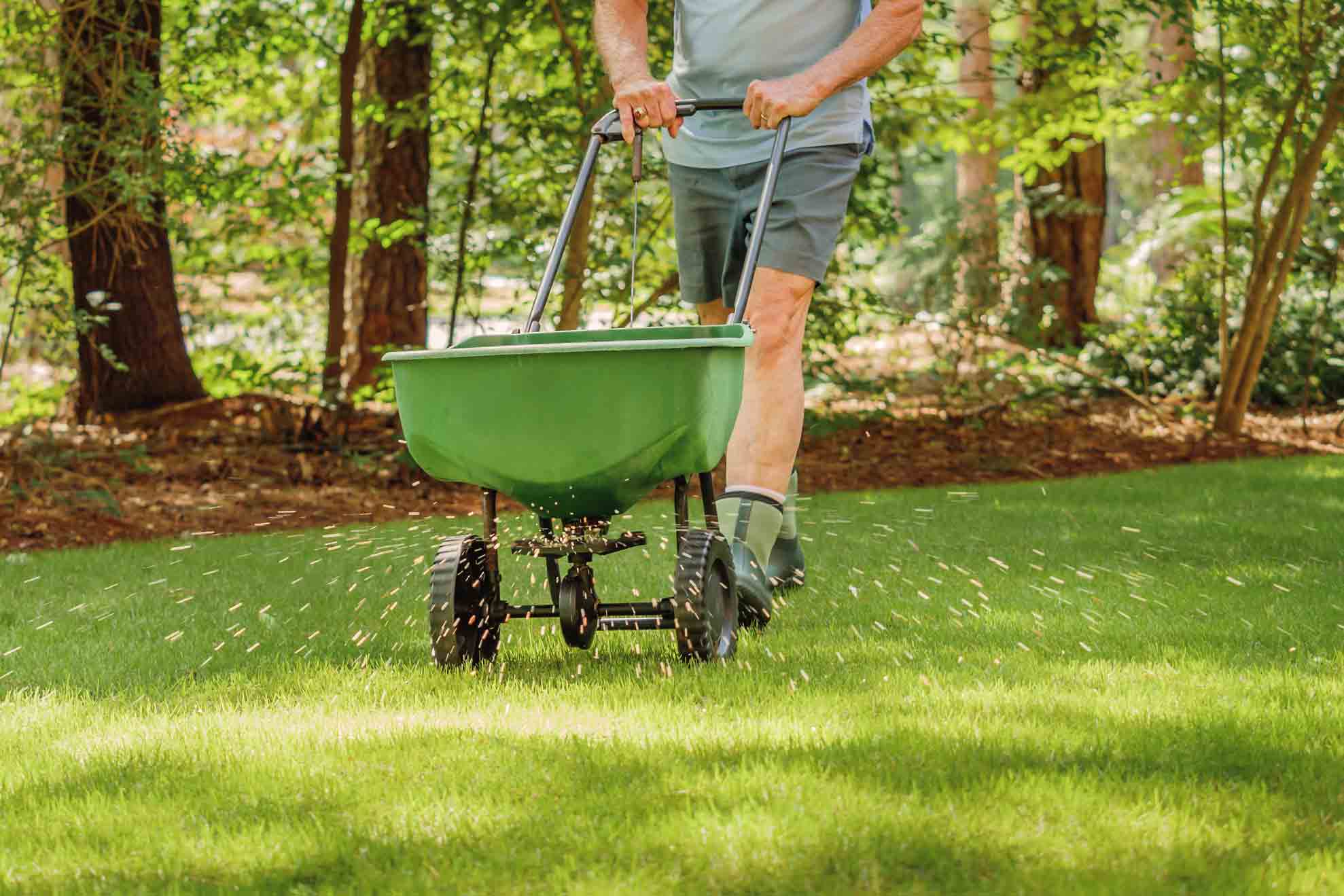
Overseeding without aeration can produce new grass, but the results are often inconsistent. Seeds that land on compacted soil or thick thatch struggle to establish roots, which leads to uneven germination and patchy growth. Some seedlings may sprout, but many fail to survive beyond the early stages.
Lawns with loose soil, minimal thatch, and good drainage have a better chance of success with overseeding alone. Even in those ideal conditions, however, seed-to-soil contact is still limited. Without soil openings, seeds rely heavily on perfect watering and weather conditions to survive.
Even when done by itself, overseeding plays an important role in lawn recovery. Grass plants naturally thin over time due to stress from heat, foot traffic, drought, and disease. Overseeding replenishes the lawn by introducing younger, more vigorous grass plants .While the benefits are valuable, they are significantly enhanced when seeds are given access to the soil below the surface.
Key benefits of overseeding include:
There are situations where overseeding without aeration can still be worthwhile. These are usually lawns that are already in relatively good condition and don’t suffer from soil compaction. In these cases, overseeding alone can provide a noticeable boost, but even then, results tend to be slower and less uniform than when aeration is included.
Overseeding without aeration may be effective when:
The biggest limitation of overseeding alone is poor seed-to-soil contact. Seeds that sit on top of compacted ground dry out quickly, wash away, or become food for birds. Without openings in the soil, roots struggle to grow downward, resulting in shallow, weak grass plants.
Compacted soil also restricts water absorption. Instead of soaking in evenly, water often runs off the surface, leaving seeds without consistent moisture. Fertilizers applied after overseeding are also less effective when nutrients can’t penetrate the soil profile.
Another overlooked issue is thatch. Lawns that haven’t been aerated often accumulate a dense organic layer that physically blocks seeds from reaching the soil. No matter how much seed is applied, establishment will be poor if thatch isn’t addressed.
Aeration changes the entire environment where grass seed grows. By pulling small plugs from the soil, aeration creates thousands of openings that allow seeds to settle directly into the ground. These holes protect seeds from drying out and provide immediate access to moisture and nutrients.
When overseeding is performed immediately after aeration, seeds naturally fall into the open holes, dramatically improving establishment and long-term turf strength.
If aeration isn’t an option, careful preparation becomes even more important. Taking certain steps can help compensate for the lack of aeration, but they still won’t match the results of combining both services.
To improve overseeding results without aeration:
When aeration is included, homeowners gain more flexibility in seed selection because soil access is improved. Cool-season grasses like tall fescue and perennial ryegrass establish especially well after aeration due to strong root development. Warm-season lawns benefit from overseeding during active growth periods when aeration improves soil conditions.
Matching the seed type to your climate, sunlight exposure, and soil conditions ensures the full benefit of aeration is realized.
Q: Should aeration be done before or after overseeding?
A: Aeration should always be done before overseeding. The open holes created during aeration allow seeds to fall directly into the soil, improving germination and root establishment.
Q: How soon after aeration should grass seed be applied?
A: Grass seed should be spread immediately after aeration, ideally the same day. This ensures the seed settles into the soil openings before they begin to close.
Q: Can overseeding fix compacted soil by itself?
A: No. Overseeding adds new grass plants, but it does not relieve soil compaction. Without aeration, compacted soil continues to restrict root growth, water absorption, and nutrient movement.
Q: Will aeration help grass seed grow faster?
A: Yes. Aeration improves oxygen flow, moisture retention, and nutrient access in the soil, which creates better conditions for quicker and more consistent seed germination.
Q: Is aeration and overseeding necessary every year?
A: Not always. Lawns with heavy traffic or compacted soil often benefit from annual aeration and overseeding, while healthier lawns may only need it every one to two years.
Q: What happens if I overseed but skip watering after aeration?
A: Without consistent watering, even well-placed seed will fail to establish. Aeration improves conditions, but moisture is still essential for successful germination and early growth.


Omaha's highest-rated lawn care company. Serving the Omaha, NE area for over 10 years.
Your Lawn. Made Easy.